School of Nursing
Nursing, taught on the ward as much as in the classroom.
One programme, 9 trimesters, KES 59,600 a trimester. Published in full — including the total — so you can plan before you commit. Next intake 1 September 2026.
The programme
Diploma in Nursing
KES 59,600 per trimester · indicativeFirst trimester KES 81,650 — it includes the one-off registration, uniform, caution money and medical.Full programme, 9 trimesters: KES 576,150
At a glance
- Duration
- 9 trimesters
- Trimester
- 4 months
- Entry grades
- KCSE mean C (plain), with C in English or Kiswahili and C in Biology
- Next intake
- 1 September 2026
Clinical practice is the point
You do not learn nursing from a textbook alone. Attachment and practicals are built into the programme and paid for as part of your fees.
- Supervised clinical placement alongside the taught trimesters.
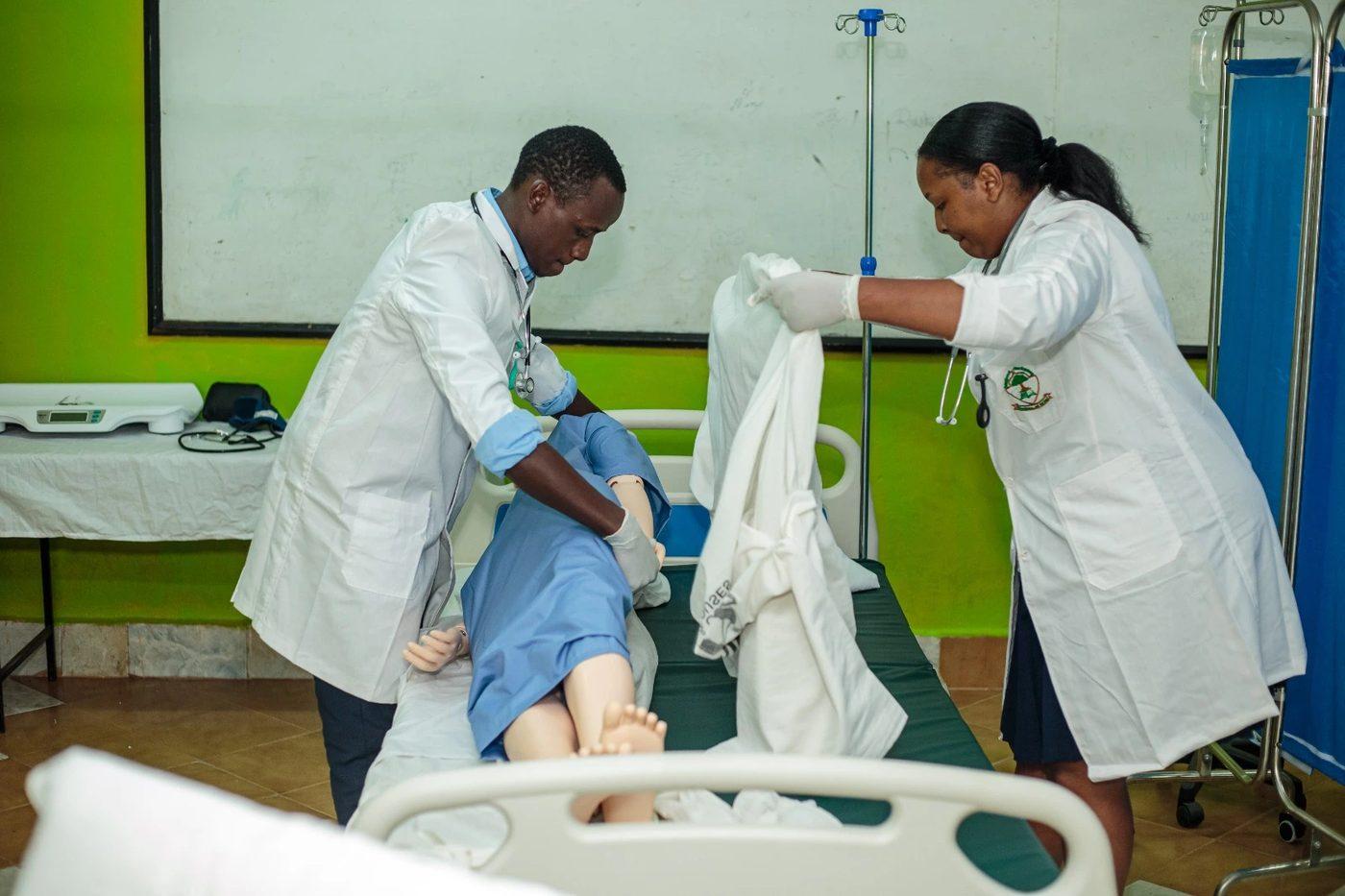
- A skills lab where you practise before you touch a patient.
- A log book you keep from day one — it is the record of what you can actually do.
- Your own clinical kit: stethoscope, aneroid sphygmomanometer, mercury clinical thermometer, pen torch and a watch with a second hand.
Your clinical placements are at five sites approved by the Nursing Council of Kenya alongside the programme: Nyahururu County Referral Hospital (the main teaching hospital), JM Kariuki Memorial County Referral Hospital, Baari Health Centre, Rumuruti Sub-County Hospital, and St Nicholas Rehabilitation and Psychiatric Hospital — covering outpatient, A&E, theatre, maternity, paediatric, rural health and mental health. See the approval and what you rotate through.
The Council approves 50 places a year. That is the cap for this programme.
Can you qualify?
Minimum entry for the Diploma in Nursing (KRCHN): KCSE mean grade C (plain), with C (plain) in English or Kiswahili and C (plain) in Biology. The Admissions Office confirms each applicant's combination. What is fixed is the paperwork — bring originals, not copies.
- Birth certificate
- National ID or passport
- KCPE certificate
- KCSE certificate
- KCSE results slip
- Primary school leaving certificate
- Secondary school leaving certificate
- Affidavit for any name changes
Do not buy uniform, kit or textbooks before you are admitted. The full list is issued on admission.
What the fee covers
Item names, so you know what is inside each trimester's bill. We do not publish per-item amounts — the figures we stand behind are the trimester and programme totals.
Registration, caution money (refundable), uniform/lab coat, the medical examination on admission and the Hepatitis B vaccine are charged once. That is why the first trimester is KES 81,650 and every trimester after it is KES 59,600. The final trimester is KES 75,200 — it carries the graduation and Nursing Council fees.
- Tuition
- Registration Fee
- Caution Money (refundable)
- Exam / Internal Examination Fee
- Library Fee
- Medical Fee (outpatient)
- Medical Examination on admission
- Students ID
- Students Activity
- Students Council/Union
- ICT / Computer Lab
- Uniform / Lab Coat
- Hepatitis B vaccine
- Attachment/Practicals Fee
- Nursing Council Fee
- Graduation Fee
- Log Book
- Accommodation
All figures are indicative — 2026 approved structure; confirm with the Finance Office. Meals and boarding are not included and are optional: day scholar meals KES 7,500 per trimester, boarding KES 22,500 per trimester. The full trimester-by-trimester schedule is on the fees page.
Ready to start?
Send one short form. We call you back — no account, no fee.